
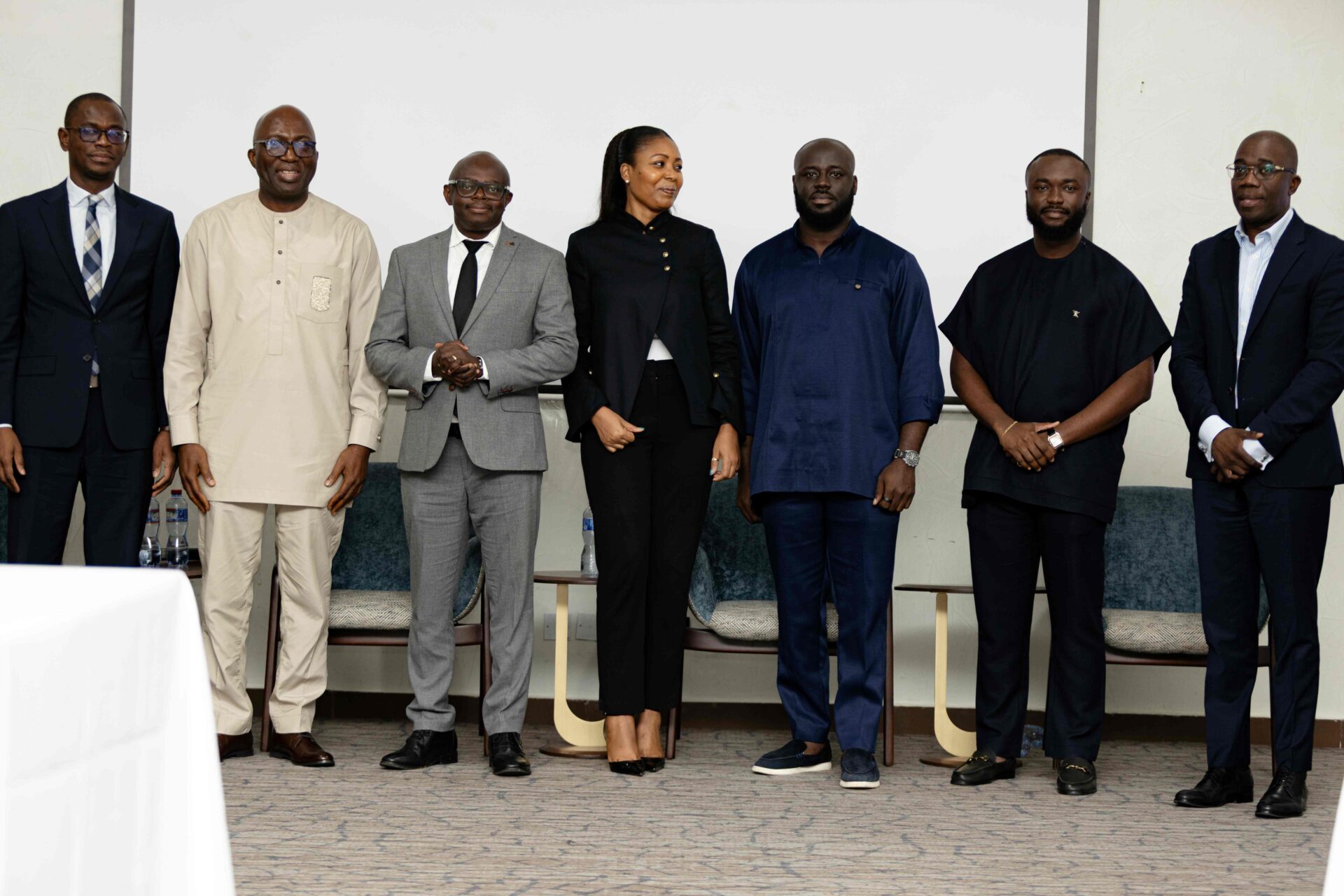
The future of Ghana’s digital economy shouldn’t be built from scratch, but rather engineered directly on top of the country’s massive, existing mobile money network.
That was the central message from Shaibu Haruna, Chief Executive Officer of MobileMoney Fintech LTD (MMFL), speaking at a high-level stakeholder workshop organized by Fidelity Bank Ghana. Addressing an audience of regulators, bankers, and tech leaders, Haruna championed tokenisation as the natural next evolution for the nation’s financial landscape.

Participating in a panel discussion titled “From Exploration to Adoption: How Banks and FinTechs Can Build the Digital Asset Ecosystem Together,” Haruna pointed out that Ghana has spent years laying down a world-class foundation. Thanks to sustained investments in mobile money and cross-network interoperability, the country already possesses a robust domestic “highway” for digital payments.
Instead of treating tokenisation and digital assets as disruptive newcomers designed to replace current systems, Haruna argued they should be viewed as upgrades to make financial services more accessible, efficient, and inclusive. The goal, he noted, is to seamlessly layer an international gateway onto Ghana’s existing domestic infrastructure, effectively dismantling the friction that historically plagues cross-border payments.
For the average consumer, this evolution promises to be practically invisible yet incredibly empowering. Haruna emphasized that because Ghanaians are already accustomed to managing their finances daily via mobile devices without stepping foot into physical bank branches, the leap to regulated digital assets will feel entirely familiar. The responsibility now lies with financial tech providers to build the platforms that offer these advanced services safely, giving citizens greater choice in how they invest, send remittances, and transact across borders.
However, building this ecosystem requires bridging old industry rivalries. Haruna stressed that the future hinges entirely on collaboration rather than competition, noting that Ghana’s regulatory framework actively encourages partnerships. It is a sentiment that resonated strongly across the panel, which also featured insights on infrastructure and cross-border solutions from Kofi Genfi, CEO of Vaulta Digital Assets, and Kwadwo Owusu-Agyemang, Country Manager of Akuna Wallet.
The banking sector shared this vision for a collaborative future. Dr. David Animante, Chief Risk Officer of Fidelity Bank Ghana, urged traditional banks to view agile fintech companies as vital strategic partners rather than threats. He noted that while fintechs bring rapid innovation to the table, banks offer institutional trust, capital, strict governance, and robust risk management.
Ultimately, the forum painted a picture of a unified Ghanaian financial sector. By marrying the innovative speed of fintechs and the power of tokenisation with the deep-rooted trust of traditional banking—all riding on the back of the country’s ubiquitous mobile money infrastructure—Ghana is positioning itself to lead the continent into the next era of digital finance.